Where to Watch the Sunset and Sunrise in Galveston
Set an alarm for a Galveston sunrise just once and you will understand why people keep doing it. The Seawall is nearly empty, the air is still cool and salted, and the first light spreads flat and pink across the Gulf before the sun itself even clears the water. About twelve hours later, the same island hands you a completely different show. The harbor just west of downtown turns molten, shrimp boats slide into silhouette, and the sky behind the old brick warehouses glows gold over the bay.
Here is the fun part, and the thing most first-time visitors do not realize until a local points it out. Because of the way Galveston sits in the water, you never have to choose between a sunrise and a sunset. You can have both in a single day, from two different edges of the same skinny island, and they look nothing alike.
The Short Answer: Galveston Island is long, narrow, and set at an angle, with its beaches and Seawall facing the Gulf and its harbor and West Bay side facing the other way. That geometry lets you watch the sun rise over open Gulf water in the morning and set over the bay in the evening. For sunrise, the free, always-open Seawall is the easy winner. For sunset, head to the harbor at Pier 21 or a bayside spot on the West End. Golden hour lands earlier in winter and later in summer, so check the time for your exact date.

The Island Trick: Gulf Sunrises, Bay Sunsets
Galveston Island is long and thin, and it lies at an angle in the water rather than running straight north to south. The developed Gulf side, meaning the Seawall and the beaches, faces roughly southeast. The harbor and the West Bay side face the opposite way, roughly northwest. Since the sun rises in the east and sets in the west, that simple layout does something genuinely fun: it puts the sunrise out over the open Gulf and the sunset down over the bay, often only a few miles apart.
Most islands make you pick one good direction. Galveston gives you both, which is why a “sunrise on the beach, sunset at the harbor” day is one of the easiest and cheapest highlights of a trip here. Here is the quick version of who goes where.
| Golden hour | Which way to look | Best spots | Great for |
|---|---|---|---|
| Sunrise | East, out over the Gulf | The Seawall, East Beach, the sand near Pleasure Pier | Quiet mornings, runners, calm-water color, an easy family photo before the crowds |
| Sunset | West, out over the bay | Pier 21 and the harbor, Harborside Drive, the West End bayside | Dinner pairings, boats and silhouettes, groups who want to linger |
Best Spots to Catch the Sunrise Over the Gulf
For sunrise, the single most reliable spot is the Seawall. It stretches more than ten miles along the Gulf, it is free, and it never closes, so you can be standing above the water well before first light and watch the whole thing build. On a still morning the wet sand below the steps mirrors the sky, which doubles the color for the price of getting up early.
A few honest notes by spot:
- The Seawall. The most dependable choice, because access never depends on a gate or a fee at the sidewalk. Pick a stretch with granite steps down to the sand, mind your footing on those steps while the light is still low, and you have a front-row seat facing east over the Gulf. If you want a fuller feel for this stretch of the island, our friends at Stay Porter Texas keep a whole write-up on the beauty of the Galveston Seawall.
- East Beach (R.A. Apffel Park). This wide beach sits at the far eastern tip of the island and faces the water beautifully, so it is a gorgeous place to be for the show. The catch is timing: the park keeps daytime gate hours and charges a beach parking fee, and in summer it often opens after the sun is already up. If East Beach is the goal, check its current opening time for your date. If you want to be in place before dawn, the open Seawall is simpler.
- The sand near Pleasure Pier. The pier’s pilings and lights give you a ready-made foreground while the sky goes pink behind them. You are shooting east over the water, so the pier reads as a clean silhouette as the sun comes up.
A good rule of thumb for golden hour: the best color often shows up in the twenty minutes before the sun actually clears the horizon, so early risers tend to catch the prettiest part before most people are even awake.
Best Spots to Watch the Sunset Over the Bay
For sunset, cross to the harbor side of the island. Pier 21, tucked just off the Strand, sits right on the water and faces northwest toward the Galveston Ship Channel, so the sky lights up over the boats and the bay while you are only steps from dinner. It is the most convenient sunset spot on the island, and the working harbor gives you something to watch besides the sky: dolphins in the channel, the tall ship Elissa at her berth, and the occasional cruise ship gliding out.
If you want more room and fewer people, you have two good moves:
- Harborside Drive and the waterfront walk. The stretch along the harbor near Pier 21 lets you find your own patch of railing away from the busiest restaurant patios while still facing the bay.
- The West End bayside. The back side of the West End looks out over West Bay, which means wide, open western sky and far less foot traffic. This is the move for groups who want to spread out, bring chairs, and let the evening go slow. A West End stay near the bay puts this kind of quiet sunset a short walk from your door.
Wherever you land on the west side, arrive with time to spare. The sky often keeps glowing for a good stretch after the sun drops, so the color after sunset can be as good as the moment itself.
The Bolivar Ferry: A Golden-Hour Ride for Free
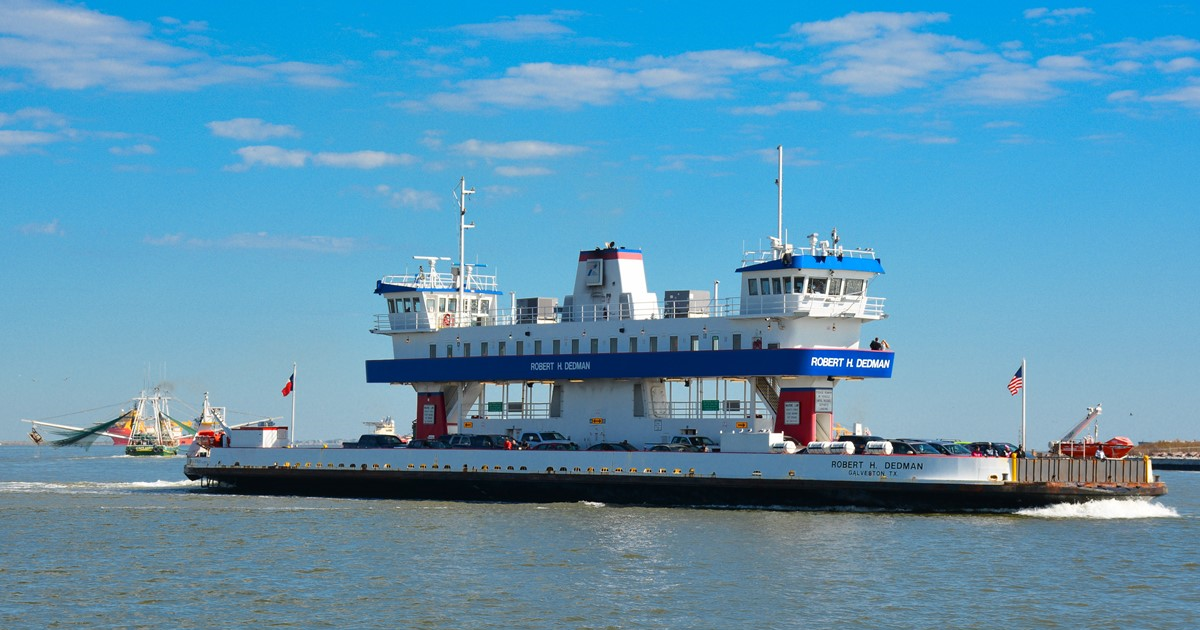
The Galveston-Port Bolivar Ferry is the best golden-hour ride on the island, and it is completely free. The state runs it around the clock in most conditions, the crossing takes roughly eighteen to twenty minutes each way, and you can ride as a walk-on passenger without a car. There is an elevated parking garage and a lot on the Galveston side for anyone who wants to leave the car and just go for the water.
The reason it makes such a good sunrise or sunset trip is the vantage point. You are out on open water, so the light has nothing in the way. Dolphins often surface in the wake, pelicans and gulls trail the boat, and along the way you pass the Ship Channel, Pelican Island, and the old Bolivar Lighthouse. A round trip runs under an hour if you stay aboard, which is about perfect for chasing the light.
One planning note: on busy weekends the vehicle line can back up for an hour or more, so a golden-hour ride is smartest midweek, early, or on foot as a walk-on. Times and details do change, so it is worth checking the current ferry schedule and fares before you build an evening around it.

When to Go: Best Months and Timing
Golden hour moves with the season, so the honest answer is to check a sunrise and sunset time for your exact date. As a rough guide, Galveston sunrises land in the early-to-mid six o’clock hour in midsummer and closer to seven in winter, while sunsets run from around five-twenty in December to well past eight in late June. A quick search for your travel dates will give you the real numbers.
Season by season, here is how the light tends to behave:
- Fall and spring are the sweet spot for most visitors: comfortable temperatures at both ends of the day and often cleaner, clearer skies.
- Winter gives you later sunrises, which is a gift if you are not a morning person, plus dramatic cloud structure that can make for a bigger sky.
- Summer brings warm, early light and long evenings, though humidity and haze can soften the colors. The payoff is that a sunrise beach walk is genuinely pleasant before the heat arrives.
Whatever the season, plan to be in place about twenty to thirty minutes early. The best color usually shows up before the sun rises and lingers after it sets, so the people who arrive right at the listed time tend to miss the best part.
Where to Park and How to Pair Golden Hour with Dinner
Parking is easy at both ends of the day if you plan for it. The beach parks, including East Beach and Stewart Beach, charge a daily parking fee with a seasonal pass option. The Seawall has a mix of free street parking and paid beach lots, and the harbor around Pier 21 offers both lots and street parking. Rates and rules change with the season, so check the current fees before you head out rather than counting on a number.
The sunset side is the natural dinner pairing, and it is one of the nicest little rhythms of a Galveston evening. Watch the light drop over the harbor, then walk a few steps to a seafood table at Pier 21 or on the Strand while the sky is still glowing. Sunrise is the opposite kind of pleasure: a thermos of coffee, a quiet beach walk while the island is still asleep, and breakfast afterward once the town wakes up.
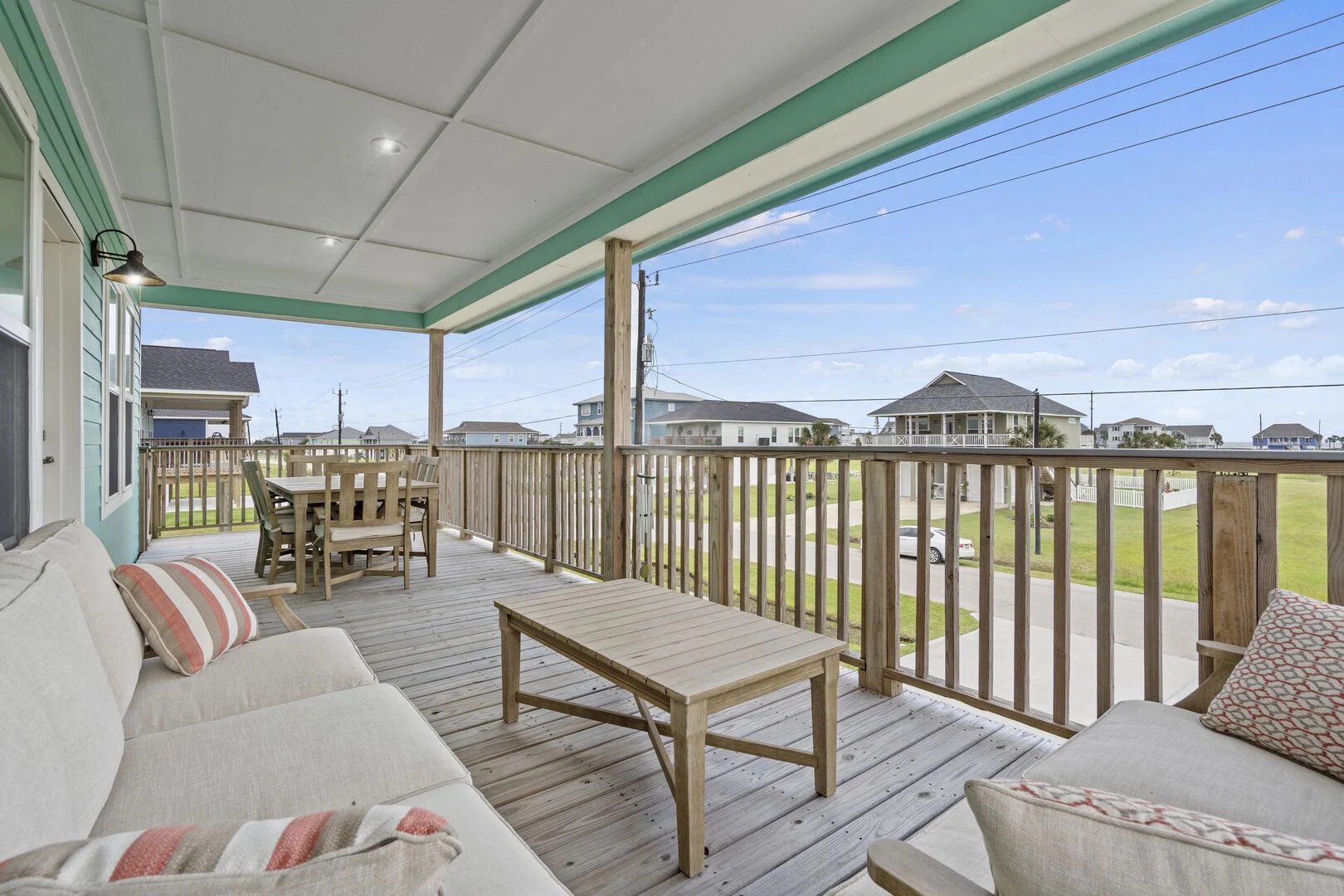
This is also where a good home base earns its keep. A gulf-view Galveston rental can put the sunrise a few steps from the coffee pot, so “catching the sunrise” means walking onto the balcony instead of driving anywhere. A bayside base on the West End does the same favor for sunset. Either way, you spend the golden minutes watching the sky rather than hunting for a parking spot.
Simple Photo Tips for a Better Golden Hour
You do not need a fancy camera for a good Galveston golden hour, just good timing and a little intention. Arrive early, shoot the light both before and after the sun itself, and give every frame a foreground. That is most of the game.
- Shoot the color, not just the disc. The twenty minutes before sunrise and after sunset often hold the richest pinks and golds, so keep shooting even when the sun is out of frame.
- Find a foreground. Pier pilings, a boat, a railing, or a person turns a flat sky into a real photo. The pier at dawn and the harbor boats at dusk do this work for you.
- Use reflections. Wet sand below the Seawall steps and the calm water on the bay side both mirror the sky and double the color.
- Tame the phone. On a phone, tap the brightest part of the sky and slide the exposure down a touch so the color stays saturated instead of washing out. Keep the horizon level while you are at it.
If you want a running head start on where the island photographs best, Stay Porter Texas has a companion guide to the most photogenic places in Galveston that pairs naturally with a golden-hour plan.
Two horizons, one very easy day
Here is the day, start to finish. The alarm goes at 6:10 and you almost hit snooze. You do not. Ten minutes later you are standing on the Seawall with a thermos, the island is silent except for the gulls, and the whole Gulf goes pink before the sun even shows itself. Breakfast tastes better after that. The middle of the day is yours. And at dusk you are leaning on a railing at Pier 21 with a shrimp boat sliding into silhouette, the sky going gold behind the warehouses, and a table waiting twenty steps away. Two horizons, a few miles apart, and you did not have to choose.
The trick is having a base where the light comes to you. A gulf-view rental puts the sunrise on your balcony, a few steps from the coffee pot, and a bayside home on the West End does the same favor for sunset, no parking hunt required. Pick the horizon you care about most and let the island handle the rest.
Set up your favorite golden-hour view a few steps from the coffee pot. Browse Stay Porter Texas gulf-view rentals for sunrise on the balcony, or a West End bayside home for the sunset side of the island.
Browse Gulf-View Galveston RentalsFrequently Asked Questions
Can you really watch both the sunrise and the sunset in Galveston in one day?
Yes, and it is one of the island’s best free experiences. Because Galveston lies at an angle in the water, its Gulf beaches face roughly southeast and its harbor and West Bay side face roughly northwest. That lets you watch the sun rise over open Gulf water in the morning from the Seawall or the beach, then watch it set over the bay in the evening from the harbor or the West End, often just a few miles apart.
Where is the best place to watch the sunset in Galveston?
The harbor side wins for sunset. Pier 21, just off the Strand, sits on the water facing northwest toward the Ship Channel, so the sky lights up over the boats and the bay while you are steps from dinner. If you want more space and fewer people, the West End bayside looks out over West Bay with wide, open western sky and far less foot traffic, which suits groups who want to bring chairs and linger.
Where is the best sunset view on the West End?
Look to the bay side rather than the beach. The back side of the West End faces West Bay to the northwest, so it catches the open western sky at sunset while the Gulf-facing beach is turned the other way. Find a spot along the bay near your rental, bring a chair, and you get a quiet, uncrowded show. A West End stay near the water makes this an easy evening walk instead of a drive.
What is the best spot for sunrise in Galveston?
The Seawall is the most reliable sunrise spot because it is free, open all the time, and faces east over the Gulf, so access never depends on a gate or a fee. East Beach at the eastern tip is gorgeous too, but the park keeps daytime hours and charges parking, and in summer it can open after the sun is already up. For a true pre-dawn arrival, the Seawall is the simpler choice.
Is the Bolivar Ferry good at golden hour, and is it free?
Yes on both counts. The Galveston-Port Bolivar Ferry is free, runs around the clock, and crosses in roughly eighteen to twenty minutes each way, so a round trip fits neatly into golden hour. You can ride as a walk-on passenger with no car, and there is a parking garage and lot on the Galveston side. Dolphins often follow the wake. On busy weekends the vehicle line can be long, so go early, midweek, or on foot.
What time is sunrise and sunset in Galveston?
It shifts with the season, so check a sunrise and sunset time for your exact date. As a rough guide, sunrises land in the early-to-mid six o’clock hour in midsummer and closer to seven in winter, while sunsets run from around five-twenty in December to past eight in late June. Whatever the numbers, arrive about twenty to thirty minutes early, because the richest color usually comes before sunrise and lingers after sunset.