Galveston, Managed by People Who Live It
“We live, work, and play on Galveston Island.” That sentence sits on Porter’s Texas pages, and it would be easy to read as marketing warmth. It is actually an operational claim, and a checkable one: the office is on Heards Lane, the team’s kids go to school here, the housekeepers know which ferry line to avoid on a Friday, and the maintenance calls get answered by people who can be at your home before the coffee cools.
This article unpacks what that local embeddedness means for an owner, concretely. Not island boosterism (though we are guilty of loving the place) but the operational translation: how living here changes listings, pricing, response times, vendor relationships, guest guidance, and the neighborhood standing of the homes we manage. Take the tour through an operator’s eyes.

A checkable claim, not a slogan
Plenty of management companies claim local expertise from an office two hours away. The claim is cheap; the reality is checkable, and owners should check it. Where is the office, physically? Where do the housekeepers and maintenance hands live? How fast can a human be at my door, in minutes not promises? Who on the team last ate at the place the house guide recommends?
Porter’s answers: 6025 Heards Lane, Suite 1W, Galveston; on the island and around the bay; minutes; and probably this week. The about page says “we live, work, and play” here because it is the literal description of the payroll. For an owner comparing companies, this is among the easiest facts to verify and among the most consequential to get right.
The island, through an operator’s eyes
What does living here actually give an operation? Take the tour: six island signatures, each translated from postcard to P&L.
Tap through the island’s landmarks and seasons, each translated into what it means for a rental home’s bookings, guests, and care.
1The Strand and downtown The island’s parlor
The historic district’s festivals, shops, and evenings are why many guests choose Galveston over a generic beach town.
What it means for your home: guests ask what is walkable, what is on this weekend, and where to park during events. A local team answers from experience, and East End listings that speak Strand fluently win the culture-seeking traveler.
2The seawall The island’s front porch
Miles of beach, bikes, and breakfast tacos: the seawall is most guests’ mental image of the trip before they arrive.
What it means for your home: proximity questions decide bookings, and honest, block-specific answers build the trust that generic “close to beach!” claims spend. We know which access points fit strollers and which sunsets deserve a chair.
3The cruise terminals The steady current
The port’s sailings create a year-round stream of travelers bookending cruises with island nights.
What it means for your home: a demand stream most owners never tap, won with luggage-friendly logistics, parking clarity, and flexible short stays. Our guides to getting to the island and the ferry exist because this stream lives on good information.
4The West End and beach neighborhoods The family coast
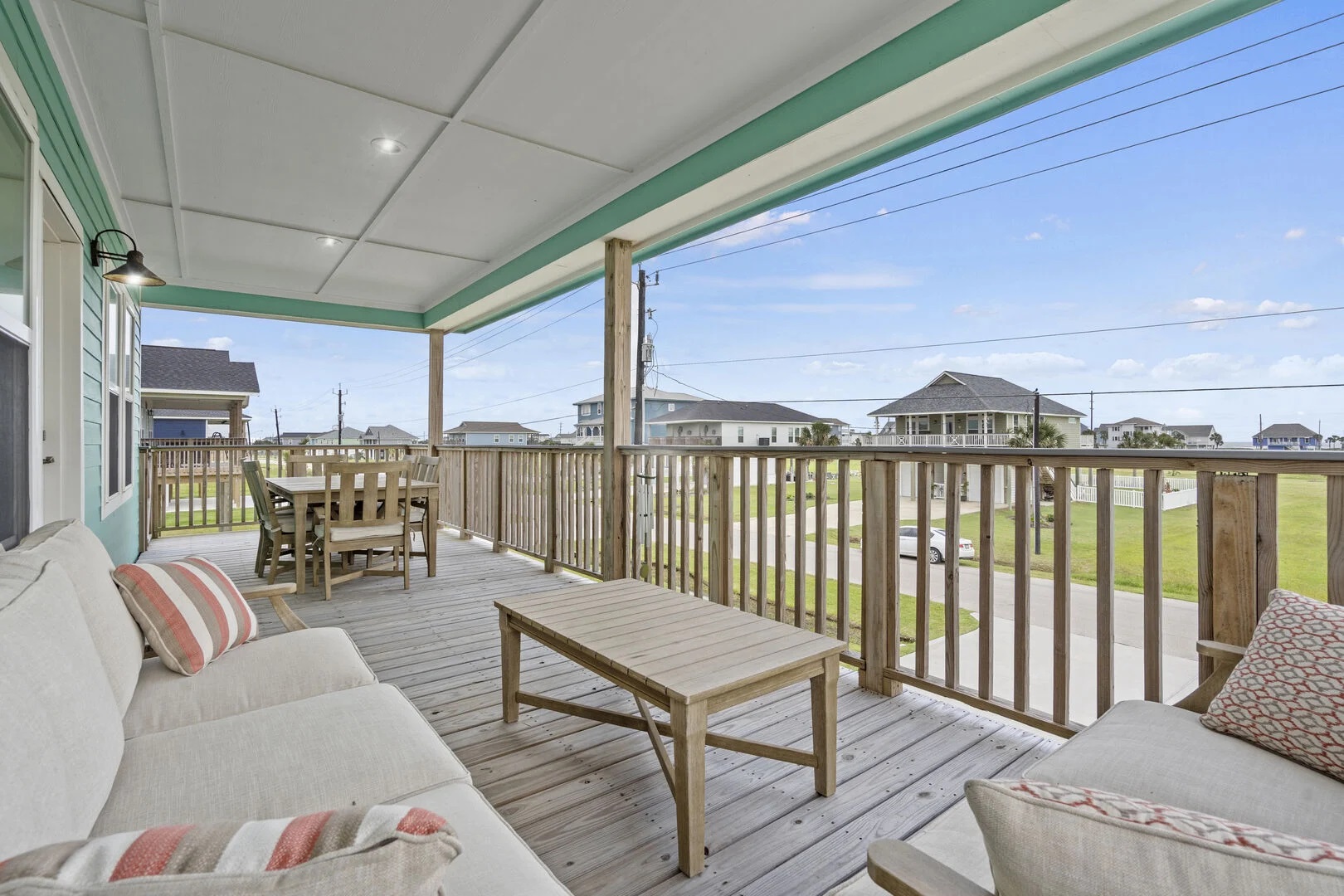
Jamaica Beach, Pirates Beach, Sea Isle: the stilted-house neighborhoods where family summers and reunion weeks live.
What it means for your home: these neighborhoods each have a personality, and matching a listing’s voice to its street takes having driven them a thousand times. It also takes knowing the neighbors, which protects a rental’s standing on its block.
5Festival weekends The island’s crescendos
Mardi Gras, Dickens on the Strand, rally weekend, spring break: the dates that fill the town and test every operation on it.
What it means for your home: marquee weekends are won in advance with pricing, stay rules, and preparation, and managed in the moment by people who know how the island actually moves on those days. Event names and dates shift each year; living here means never being surprised.
6Birding season and the quiet gifts The connoisseur’s island
Spring migrations, winter beach walks, and the island’s gentler seasons draw travelers the brochures undersell.
What it means for your home: quiet-season demand exists for homes positioned honestly for it, and local knowledge (where the spoonbills are, which months the beaches empty) turns off-peak listings from apologies into invitations.
An operator’s illustrative reading of the island. Event names and timing change year to year and are verified each season; neighborhood fit varies home by home.
Notice the pattern across all six: the tourist sees attractions; the operator sees demand streams, guest questions, and preparation calendars. Both loves are sincere. Only one of them books your shoulder season.
Fluency: the listings only locals can write
Every island listing claims beach proximity and charm. Fluent listings do something rarer: they match a home’s voice to its actual street and its actual guests. An East End Victorian sells differently than a Sea Isle stilt house; a cruise-bookend condo answers different questions than a reunion compound. Getting each right requires the thing no keyword tool supplies: having stood in the driveways, driven the blocks at night, and heard a thousand real guest questions, the fluency that powers everything in the island demand map.
Fluency also compounds in guest guidance: the house guide with the correct ferry advice, the breakfast line worth it and the one that isn’t, the beach access that suits a stroller. Guests feel the difference as care. It reads, in reviews, as “the hosts thought of everything,” and it is really just the home team writing down what it knows.
Presence and relationships: the island bench

The operational spine of local management is simple geography: when the lockout happens, the vendor visit needs supervising, or the sky turns interesting, our people are minutes away, a coverage we detailed in owning from afar and weather readiness. No dispatch center, no two-hour radius, no hoping: island staff for island homes.
Around that presence sits the bench: the island plumber, electrician, and AC hands who answer our calls because the relationships are old and the work is steady. On an island, vendor capacity is finite and relationships are rationed; a company that built its bench years ago effectively reserved response time your home inherits on day one. That bench, more than any brochure, is what “local expertise” means at 7 p.m. on a Friday.
Standing: your home’s reputation on its own street
An underrated asset of local management: the company’s standing in the community becomes your home’s. Porter’s name is on doors all over this island; our housekeepers wave at the neighbors, and the neighbors know who to call before anyone reaches for a complaint. Rentals managed by familiar, accountable, reachable people stay welcome on their streets, which protects the long-term ease of operating there, a courtesy loop that pairs with the screening standards that keep stays neighborly in the first place.
Reputation cuts the other way too, and we accept that gladly: a company whose owners, guests, and neighbors all live within honking distance cannot hide from its own performance. Accountability with a short commute is a feature, and owners should prefer managers who cannot leave town on their mistakes.
The owner’s translation
Summing the tour for a decision-maker: local embeddedness converts to owner value through five channels: listings and guidance written in fluent Galvestonian, physical response measured in minutes, a vendor bench with reserved capacity, pricing and positioning informed from inside the demand, and accountability that lives where your home does. Each channel is checkable in an afternoon, and worth checking for any company, ours included; the how-to lives in what local expert actually means.
Your island home is a physical thing in a particular place. The team caring for it should be too. Ours is, gladly, and the door on Heards Lane is open whenever you want to shake hands with the people behind the phrase, starting at the management page or 409-770-3872.
Frequently asked questions
Why does it matter if my property manager is local to Galveston?
Five concrete channels: fluent listings and guest guidance only islanders can write, physical response measured in minutes for turnovers, lockouts, vendors, and weather, an island vendor bench with relationships that answer, market sense from living inside the demand, and accountability that resides in the same community as your home. Each converts directly to bookings, care, and peace of mind.
How can I verify a company’s local presence claims?
Check the physical facts: the office address (visit it), where field staff actually live, how many minutes a human needs to reach your door, and whether the team’s local recommendations sound lived-in or searched-up. Porter’s Texas office is at 6025 Heards Lane in Galveston, and the team welcomes exactly this verification.
Does local knowledge really affect bookings?
Measurably: block-specific proximity answers convert where generic claims stall, neighborhood-matched listing voices win their intended guests, cruise and festival demand is captured by teams that understand how those travelers move, and honest quiet-season positioning books months that summer-only thinking writes off.
What is special about managing on an island specifically?
Scarcity and community: vendor capacity is finite, so old relationships effectively reserve response time; weather readiness is a practiced local craft; and neighborhood standing matters more where everyone knows whose name is on the door. Island management rewards embeddedness and punishes distance faster than mainland markets do.
Which Galveston neighborhoods does Porter know and manage?
The team operates across the island’s rental landscape: downtown and the East End’s historic streets, the seawall corridor, and the West End beach neighborhoods like Jamaica Beach, Pirates Beach, and Sea Isle, plus nearby Kemah on the bay. Each area’s personality shapes how its homes are listed, priced, and cared for.
Does Porter’s local team handle festival and event weekends differently?
Yes: marquee dates like Mardi Gras and Dickens on the Strand are prepared in advance (pricing, stay rules, home readiness, guest communication) and managed in the moment by people who know how the island moves on those days. Event names and timing shift each year, and living here means the calendar never surprises the team.
Your island home deserves island hands
Porter’s office is on Heards Lane, and the team’s lives are on this island. That is the difference your home feels daily. Come meet us.
Explore Porter Texas management Call 409-770-3872